

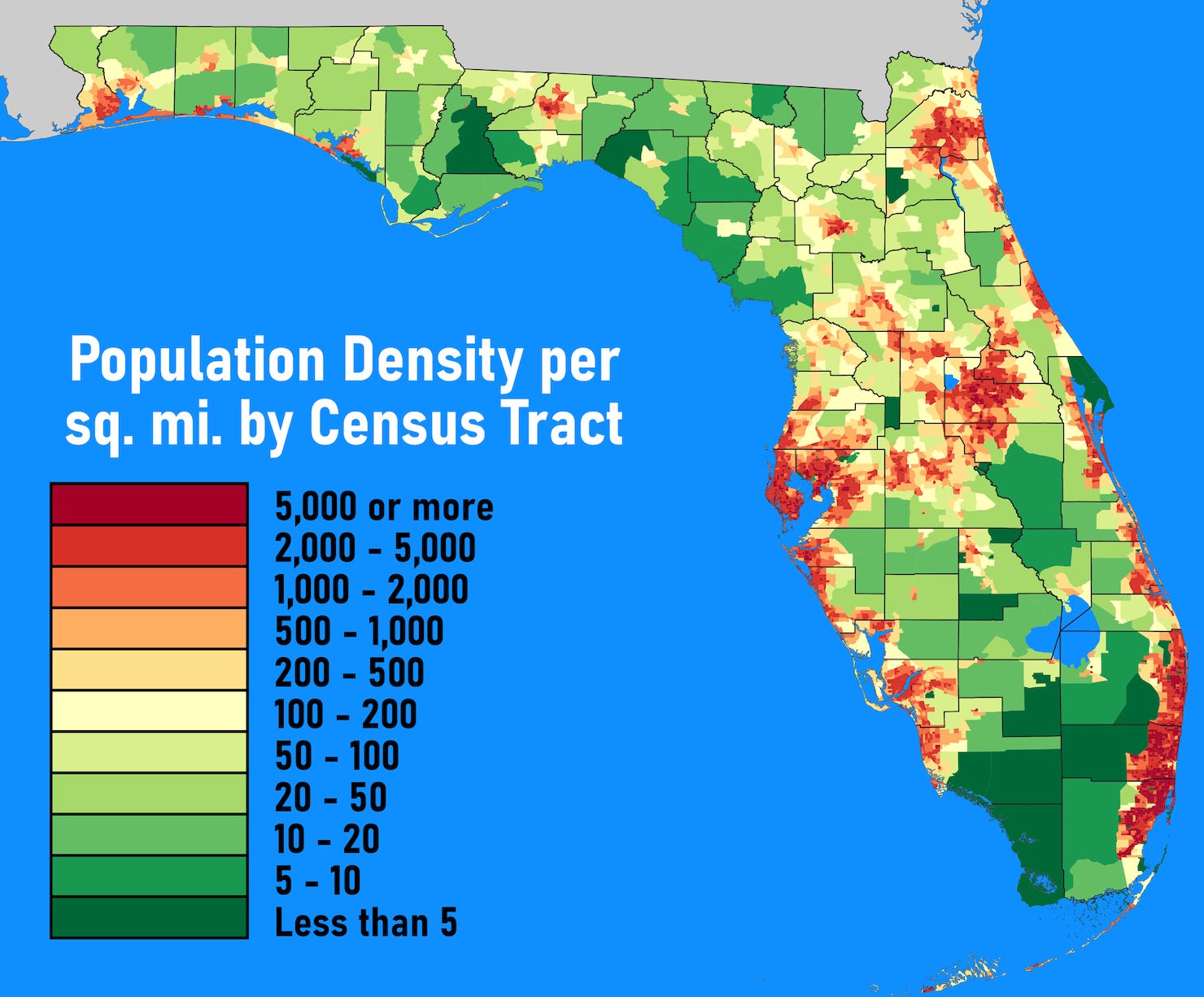
Florida’s populationd density is five times the national average.
The Future of Where’s member base has been increasing dramatically in recent weeks — so thanks to all of you? Help us pay the bills by becoming a paid member, or help us spread the word by becoming a free member. Founding members get an autographed copy of Bill Fulton’s book Place And Prosperity.
Not long ago, I was working for a city on the Gulf Coast of Florida, which had begun to realize that its endless platting for quarter-acre lots was going to be a financial disaster. The city was I the process of rezoning much of its land – especially land along the local interstate, which was designated for warehousing and logistics.
At first, I was skeptical that this mostly low-density residential community would actually get a lot of logistics buildings. Then the city’s economic development folks explained: There had been so much development along the interstate that there was no more vacant land anywhere else nearby where the warehouses could go.
This is the reality of Florida today: With more than 23 million people, it’s crowded and filling up fast. And this, among other things, may dramatically change the growth dynamic in Florida from now on.
As I explained in Monday’s Substack post , Florida has seen a precipitous drop in migration from other states in the last couple of years and is likely to see a major drop in international immigration because of the current administration’s policies. Meanwhile, “natural increase” (the number of births minus the number of deaths) in Florida is basically zero because it has a large older population.
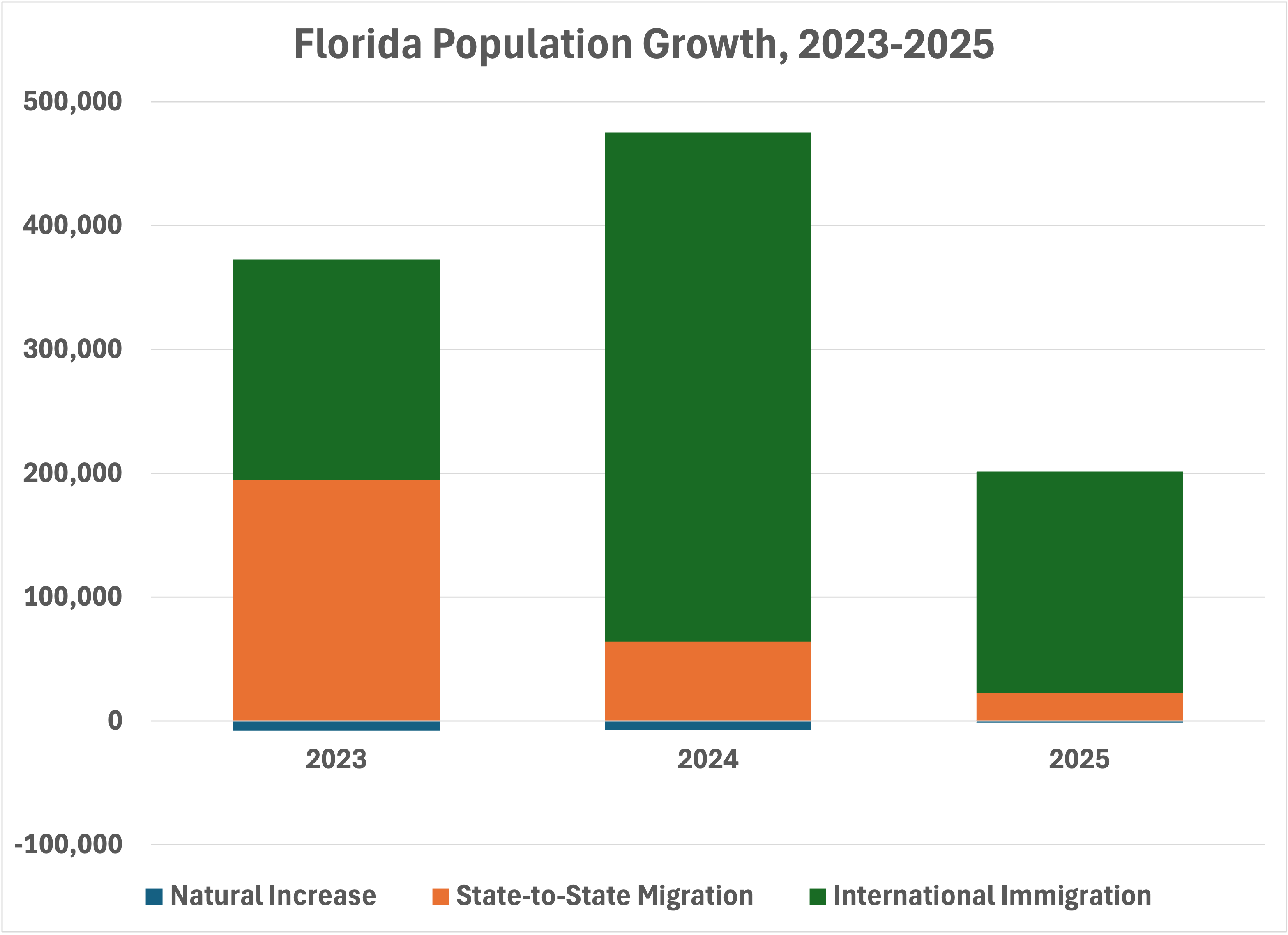
In other words, after a century of growing rapidly, Florida is facing the possibility of slow or even stagnant population growth in the future.
Just to the North, once-booming Georgia’s population growth is slowing down as well. The state’s growth is about half now of what it was during the boom times of the ‘90s and early 2000s. It still attracts some folks from other states, but that’s no longer a huge number. And international immigration is pretty minimal.
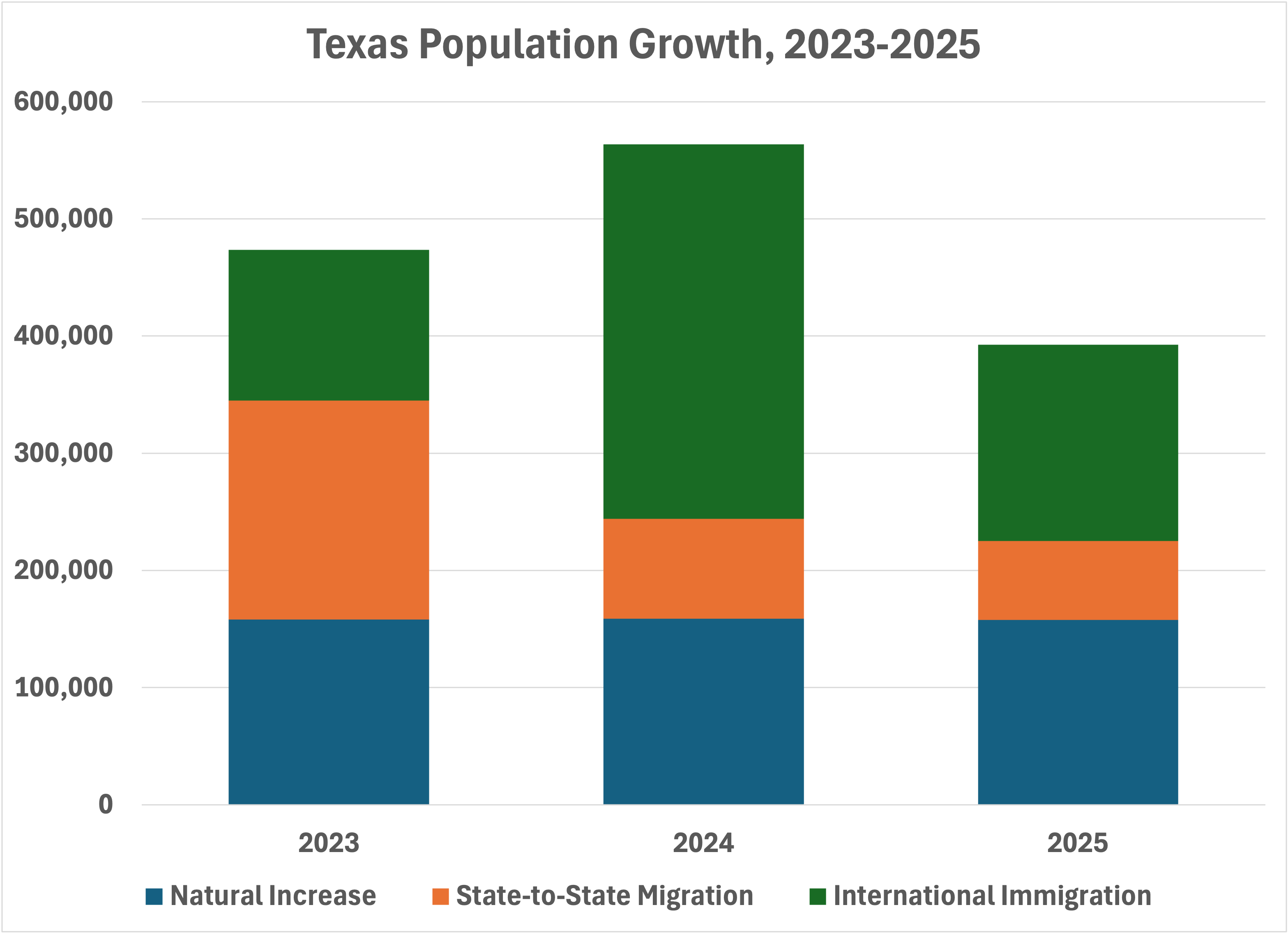
Meanwhile, Texas is facing some of the same dynamics. Texas is not filling up fast, because it’s five times as big as Florida. And Texas leads the nation in natural increase (by a lot). But Texas has also seen a big drop in migration from other states – it’s behind North Carolina now and barely ahead of South Carolina, for heaven’s sake – and as a border state it’s also likely to experience a steep drop in international immigration in the years ahead.
So even Texas isn’t immune from slowing population growth either.
As I noted on Monday, that’s not to say all Southern states are slowing down. The population boom has moved north, to the Carolinas and Tennessee.
Facing Lower Population Growth
Nevertheless, the trends in Florida, Georgia, and Texas raise an important question: Can the South’s traditionally booming states figure out how to prosper – and maintain solvent cities – in the face of lower population growth?
It’s a tough transition elsewhere. As I have written elsewhere, it’s a transition California is currently going through – after almost two centuries of unbridled growth.
Big population increases usually lead to a housing construction boom. That generates a lot of (temporary) economic activity as well as an increase in the tax base that is huge at first but can erode over time, especially if property taxes are limited, as they are in California and, increasingly, in Texas as well. (I wrote about the property tax trap here.)
Over time, however, public infrastructure grows old and need to be replaced. If the population doesn’t keep growing, that cost burden falls in current residents, who usually aren’t very happy about having to pay more in taxes. Public facilities like schools are underutilized, which creates a huge set of difficult choices for school districts: closing neighborhood schools to save money, keeping them open at a loss in case population growth booms again, or selling surplus school property in order to get a cash infusion that will stave off fiscal disaster a little while longer.
In order words, if you’re used to feeding off of population growth, it’s very hard to pivot. So how will communities in places like Florida, Georgia, and the Texas Triangle make this transition? Here are three things these communities – and their states – to prosper as they move toward lower population growth.
1. Be realistic about the likelihood of future growth
The worst thing you can do when your population growth begins to slow is to assume it’s a temporary condition. Yes, sometimes we see population growth bounce back when conditions return to “normal” after a recession or an event like COVID. But most communities go through a pretty predictable cycle of growth: The population grows rapidly during the first generation of development, when raw land is being converted to rooftops, and then slows down when the community begins to run out of land. And over time, as first-gen residents age, the population often declines because kids grow up and leave.
Occasionally international immigration or high-rise development will create a spike in population in a mature community. But that’s not typical. The fact of the matter is that once your population growth begins to slow down or stagnate, it’s not going to turn around. Which is why it’s so important to …
2. Focus your economic development efforts on wealth creation
If new residents and the rooftops that come with them are not increasing your tax base, then you need something else to do it. That means transitioning your efforts from increasing the number of people to increasing the amount of wealth. Some Rust Belt cities like Pittsburgh have figured this out, to their advantage. It means focusing not on new residential development but rather on new business development that can bring higher-paying jobs and more successful businesses (especially businesses that export goods and services, rather than businesses that serve the local residents).
This can be a huge transition for a local economic development office that has been focused on how to get enough retail to serve the rooftops. It also means, in some cases, resisting enormous pressure from residential developers to flip all of your remaining vacant land from non-residential to residential use. And that’s why it’s important to …
