
How To Build A Village
It takes a lot more than zoning, as suburban communities in the North seeking to make the transition are beginning to find out.

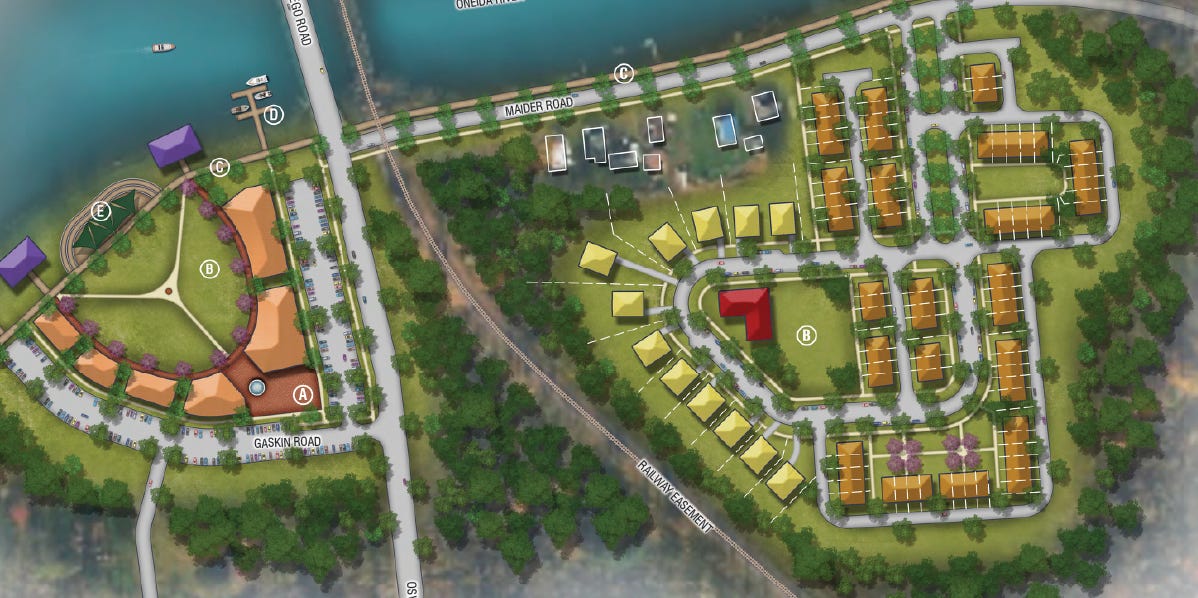
An image from LaBella Associates’ village-style land use study for the Town of Clay, New York, near where Micron’s semiconductor plant will be built.
Thanks for reading The Future Of Where, which covers trends about place and location but also provides — as with this post — practical advice to planners and others in the placemaking business. You can help us out by becoming a subscriber today! Founding members will receive an autographed copy of Bill Fulton’s book Place And Prosperity.
A few weeks ago, I wrote about the idea that villages, rather than conventional subdivisions, will be a necessary part of the revival of my home territory of Central New York when a new growth boom hits driven by the arrival of Micron’s major semiconductor plant.
As suburban and rural towns deal with growth for the first time in memory, villages are a cost-effective way to provide a variety of housing types and activities that traditional suburban development simply can’t provide – at least not without huge fiscal strain.
But, as I pointed out, existing villages in a place like Central New York have limited capacity. To take advantage of the benefit villages provide, you have to build new ones. And that’s not easy.
Oftentimes, planners seem to think that the way to create new villages – or strengthen existing ones – is simply to change the regulatory regime. It’s a common refrain, especially among New Urbanists and form-based code devotees, that traditional villages are “illegal” to build and therefore regulatory reform is required to make them “legal” again. How many planners have applauded wildly when Andres Duany, in the middle of an acerbic speech, throws the zoning code into a trash can. Sometimes, they applaud even when it’s their own zoning code.
But here’s the thing: Zoning alone won’t solve the problem. Rural/exurban America is littered with form-based codes that haven’t been used. (I wrote about this a while ago in reference to Ramona, a rural village in the mountains of San Diego County.) In writing new codes – especially in the South – Duany and his colleagues have generally not been working for local governments. They’ve been working for developers who want to build New Urbanist communities in unsophisticated cities and towns.
And that experience makes it clear that while yes, you need zoning, you also need four other things to successfully create new villages that can help alleviate growth pressure in a fiscally sustainable way.
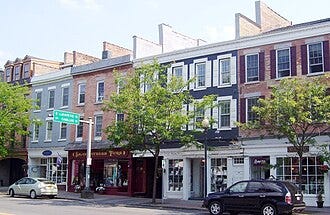
Main Street, Skaneateles, New York
First, you need significant infrastructure – principally roads, sewer, and water – and this is a new thing to many communities, especially those that have lived off of wells and septic forever.
Second, you need a variety of housing types – not necessarily apartments, but certainly smaller houses and townhomes.
Third, you need retail that will attract beyond the village – because the village alone will not be big enough to support anything more than maybe a coffee shop.
And finally, you need developers willing to take all this on – and that usually doesn’t mean the developers you’ve had forever, who are used to building low-density single-family subdivisions.
In the absence of thee four things, all you’ll have is pretty pictures. So let’s take a look at these four things, one at a time.
