
Is The Third Place Dead?
We're working at home and in coffee shops, living in our workplaces, and even trying to play ping-pong at the office. But we still need to escape to "The Third Place".


This coffee shop ought to be a Third Place, but it’s not.
The Future Of Where works because you read us and support us. Become a paid subscriber today and help us pay the bills. (Founding Members get an autographed copy of Bill Fulton’s book Place And Prosperity.) Or try us out as a free subscriber — but help expand our audience by passing posts like this along to others.
Over the weekend I returned from one of my periodic visits to Bend, Oregon, where my daughter and her family live. Situated in the High Desert east of the Cascades, Bend has become famous – or maybe notorious – as a kind of puffy-jacket version of the Bay Area: tech workers, progressive politics, and more than 50 roundabouts. It’s super-expensive – more expensive than Portland by far and closing in on Seattle as the most expensive city in the Pacific Northwest.
And in addition to expensive housing and puffy jackets, it’s got two starkly distinctive features:
— More than a quarter of the work force works remotely, double the national average; and
— It has more breweries per capita than any other city west of the Mississippi (or, for that matter, west of the Appalachians).
What this means is that if you hang around Bend enough, you will wind up spending a lot of time in breweries with tech workers who work remotely. Some of them are drinking beer. Some of them are working. And some of them are doing both.
In theory, these folks are today’s “Third Place” leading edge. They spent all or most of their time in Third Places like coffee shops and brew pubs. But the more I think about it, the more I think that they’re not reinforcing the whole idea of the Third Place. They’re tearing it down. And I am not sure if that’s a good thing for cities and other communities.
Almost 40 years ago, sociologist Ray Oldenburg popularized the idea of the Third Place – the place where you go to get away from home and work – the First and Second Places – where you often get bogged down by life’s responsibilities. (Ray himself came up with the idea partly because he met his buddies every morning at a coffee shop in Pensacola, where he lived while teaching at the University of West Florida.)
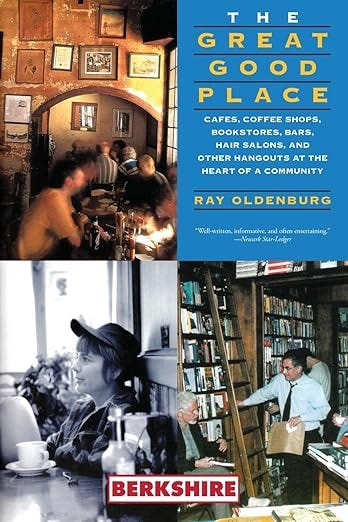
What A Third Place Is Really About
Before we mistake today’s coffee shop or brew pub for a Third Place, it’s important to remember how Oldenburg himself defined the Third Place. By his definition, it’s got seven characteristics:
1. It’s open and inviting – no need for an appointment.
2. It’s comfortable and informal.
3. It’s convenient – preferably in your neighborhood.
4. It’s unpretentious – nothing fancy or expensive.
5. There are regulars.
6. The main activity is conversation.
7. Laughter is frequent.
I italicized conversation and laughter because these illustrate the fact that the Third Place is a social place – a place where people get together to enjoy each other’s company. Not for nothing did Oldenburg call his book not “The Third Place” but The Great Good Place.
In other words, when remote tech workers are strapped to their laptops and their airbuds while drinking a latte or a beer in a coffee shop or a brew pub, they may be in the kind of location that is supposed to be a Third Place. But they are not really in a Third Place.
Increasingly, we live in a “place mashup”. The First Place (home) has, for many, become The Second Place (work) – thus combining the two stress-filled environments that Third Places are supposed to provide refuge from. Increasingly, as I noted above, Third Places have become the location for Second Place activities – turning a stress-relief location into a stress-inducing location. Many Second Places have taken on aspects of a Third Place – free coffee, ping-pong tables, happy hours – but of course in the end they’re places where you’re supposed to work. And if you’re an artisan, you may well be turning your Second Place into your First Place by living in your workshop.
Can A “Fourth Place” Do The Trick?
So where does this leave the Third Place?
Not long ago, Arnault Morisson, a European economic development professor and consultant, suggested that maybe we need to forget about the Third Place idea altogether. (You can read his paper here.) Morisson argues that the Third Place is dead. Or, more accurately, we now live in a mashup of the First, Second, and Third Places – which might be called the Fourth Place.
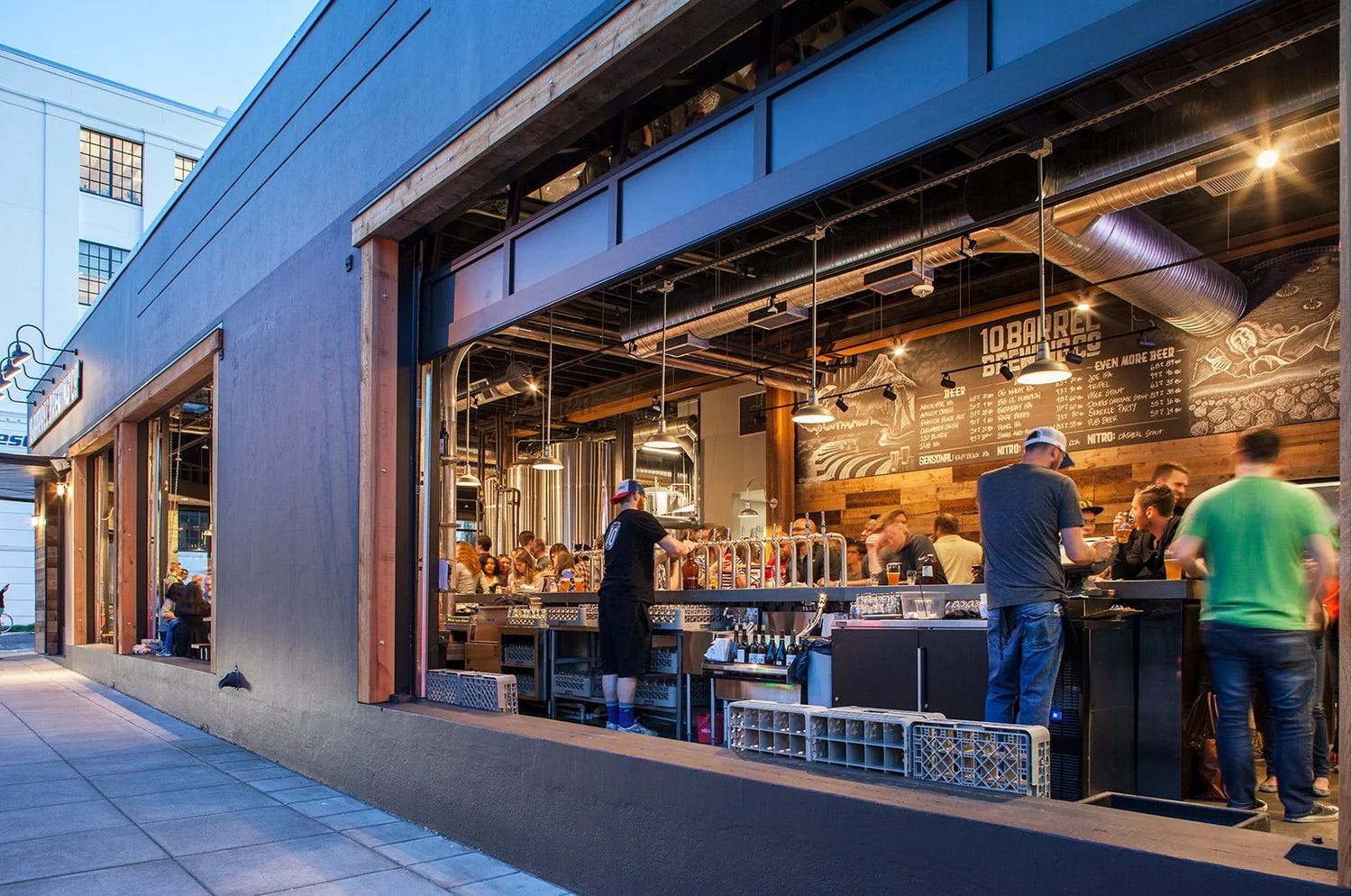
10 Barrel Brewing in Bend, Oregon
“The frontier between the traditional first, second, and third place is increasingly unclear, leading to the creation of new spaces and a new place,” Morisson writes. “The emergence of the fourth place, coworking, comingling, and coliving spaces highlight the importance of tacit knowledge, social interactions, networks, and the spatial dimension of innovations in the knowledge economy.”
And if you’re overwhelmed by Morisson’s mashup, another idea for the Fourth Place comes from Sebastien Dubois, a French-Canadian transportation researcher, who defined the Fourth Place as a solitary place that individuals must carve out to think. (His thoughts on this topic can be found here.)
Both really interesting, though very different, definitions of the Fourth Place. But here’s what’s really interesting: They’re both focused on work. They’re focused on how knowledge workers can best position themselves to do innovative and productive work.
Which, of course, is exactly not what Ray Oldenburg was talking about. Sort of.
Remember the two characteristics of a Third Place that I italicized: conversation and laughter. For Ray, the Third Place was about social interaction and relaxation – escaping the cares of everyday life to hang out with your buddies and have a good time. I knew Ray a little (he died in 2022), and he was a gregarious guy who knew that this was important to people’s lives and happiness.
But both definitions of the Fourth Place that I described above aren’t about relaxation or social interaction. They’re about how to be the most productive grind you can be as a knowledge worker.
And that misses the point.
In order to be truly productive
