
The Showtime City
The irony of Showtime Cities is that the very characteristics that make us want to live in them – character, charm, amenities, walkability – also make people want to visit them.

The Future Of Where is powered by readers like you. Become a free or paid subscriber today!
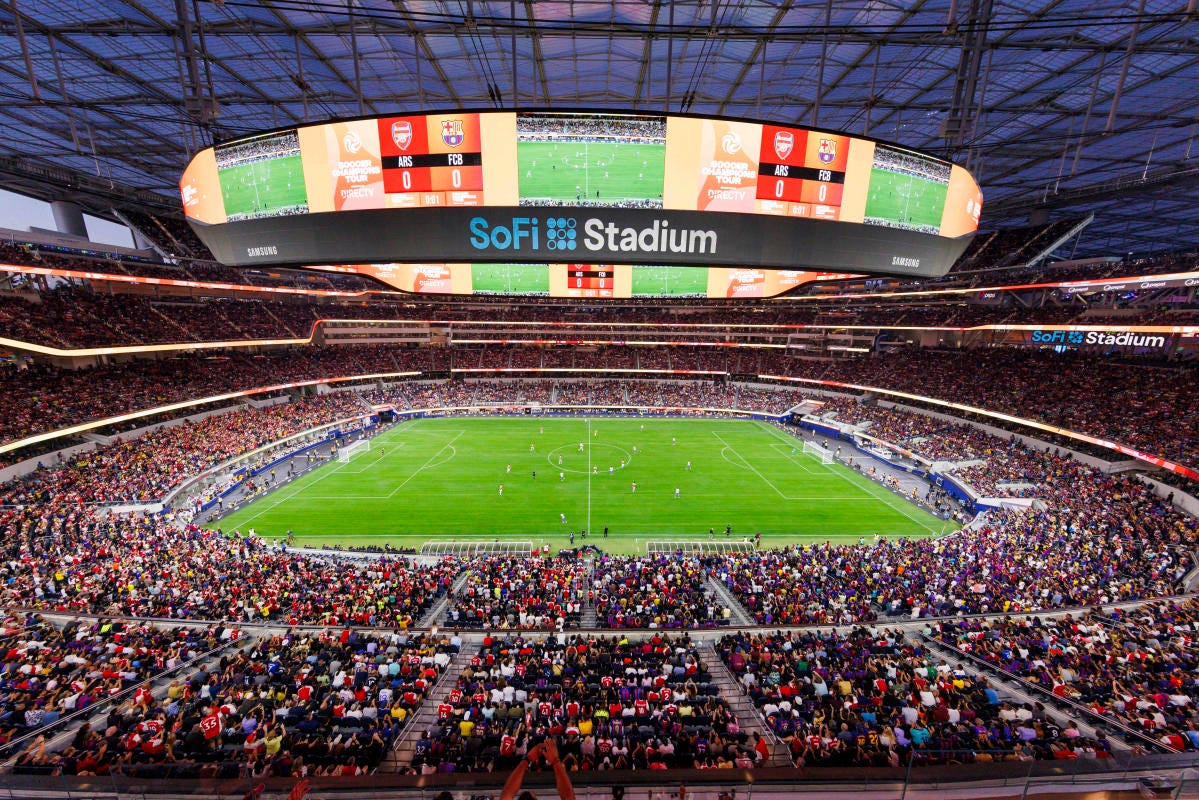
In a stupendous example of poor travel planning, we wound up driving on the 405 past Sofi Stadium in Los Angeles (actually, in Inglewood) the afternoon of the first World Cup game between the United States and Paraguay.
Crawled past the stadium is more like It, because our trip from San Diego to my adopted hometown of Ventura for the weekend was the slowest and probably most miserable intercity driving trip I’ve ever undertaken.
And then when we got to Ventura, we battled crowds, high prices, and late-night noise from the “Boots and Brews” country music festival, which was taking place two blocks from our hotel.
That was last weekend. This weekend we’re back in San Diego navigating around 50,000 visitors who are in town for the first-ever San Diego NASCAR race, which is taking place across the bay in Coronado.
And all this came only two weeks after the San Diego Rock’n’Roll Marathon drew 20,000 people, filling up the hotels and restaurants in my neighborhood. (The finish line was about four blocks away from our place.)
Ok, you might say, quit complaining because it’s just summer. Fair enough. But there’s actually more to it: Big events have become more common in American cities – by the way, they’re getting bigger all the time – and they are becoming part of almost every city’s economic development strategy. Every city, it seems, wants to become a “Showtime City”.
Showtime City Is Big Business
That’s because events are now big business – a $1.2 trillion business annually, according to some sources. Almost half of that is sports. A significant chunk of it is music – meaning, as I have written in the past, that a Taylor Swift concert is almost an economic development play all by itself, generating almost as much economic activity as the Super Bowl. (Actually, her last tour was the equivalent of 53 Super Bowls.) Then there’s Burning Man and Coachella, both in the Southwestern desert, which are essentially pop-up cities.
And everywhere I go, I keep hearing about more and more economic development efforts focused around events of all kinds – everything from the Olympics in Los Angeles to youth sports tournaments, which have exploded and in so doing become their own kind of economic development play. Recently I’ve been doing work in Chattanooga (I’ll write more about that at a later time), which now has a whole separate tourism-based organization, The Sports And Events Corporation, devoted entirely to recruiting everything from youth sports to college basketball tournaments. TSEC also coordinates some of the venue logistics with everybody from the local convention center to parks and recreation departments.
The Strain On Host cities
Yet all this puts a strain on the host cities, as the World Cup is showing. A couple of years ago I was doing some economic development work in Ventura, and I proposed that part of the strategy should be to attract more big special events. Ventura’s already got a healthy special events economy for a city its size. It’s a beach town with a historic downtown, it hosted the X games for a couple of years, and big names play concerts at the Ventura County Fairgrounds on a regular basis.
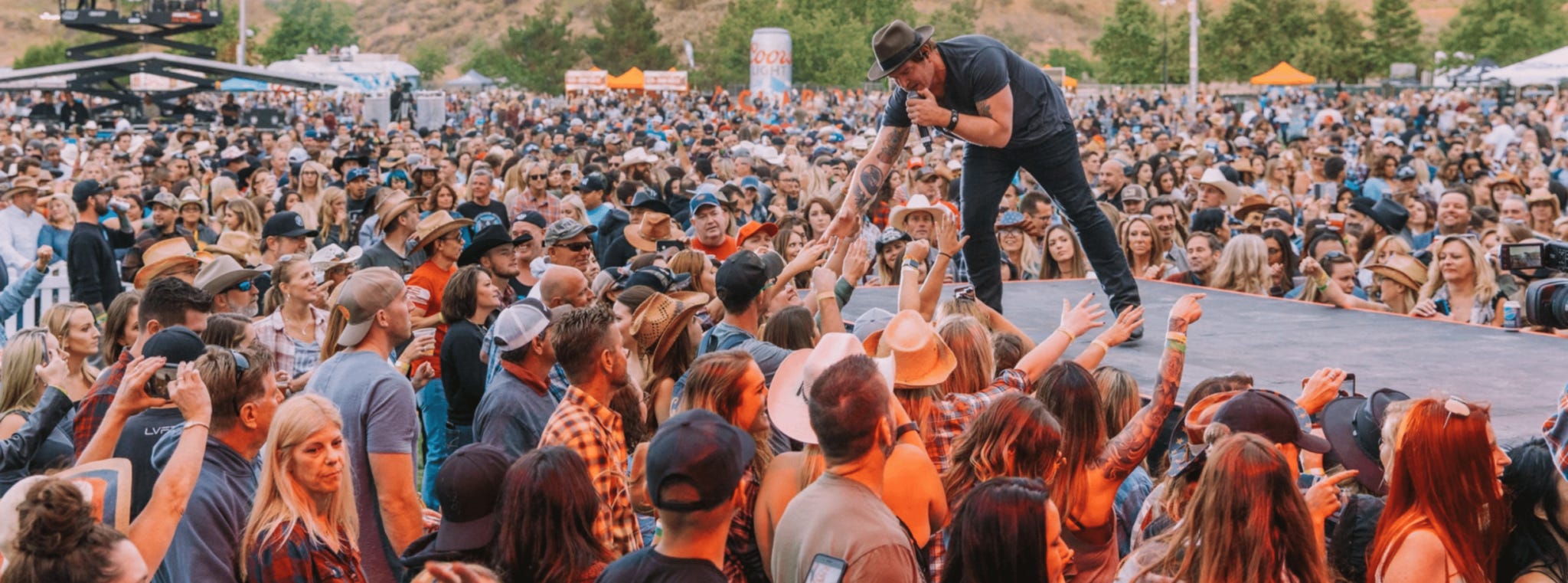
The Boots & Brews Country Music Festival in Ventura
So I was a little surprised that I got some pushback. (To be fair, I proposed recruiting two additional big special events and some folks misinterpreted that as recruiting two additional events every year forever – two the first year, four the second, etc.) As the showtime economy has grown in Ventura, the locals are feeling a bit of strain. To many of them, it seems like they are losing their town to the visitors. As a former longtime resident, I feel a little of that myself – even though I am now a visitor.
So I think the question about Showtime Cities is not only whether they are sustainable but whether they are withstandable. Because the irony of Showtime Cities is that the very characteristics that make us want to live in them – character, charm, amenities, walkability – also make people want to visit them. And that makes for an uneasy relationship between the locals and the tourists.
Of course, the sustainability of a showtime economy requires a huge amount of local infrastructure – hard and soft – to accommodate it. As I learned when I was on the City Council in Ventura, you have to have not only a strategy but also a robust visitor office, aggressive marketing, and effective venue management. You also have to have a huge physical infrastructure: music venues and sports fields, probably a convention center, hotels and restaurants.
The biggest Showtime Cities – Las Vegas and Orlando, which have different types of showtime economies – have built their entire city around this hard and soft infrastructure. The locals understand this – know they are economically dependent on it – and learn to live with it. (I’ve always been amused at Las Vegas’s neighborhood casinos, where the local go to gamble without having to deal with the tourists.) But in other cities with a more mixed economy – showtime and other components – withstandability is more difficult because not everybody in town is bought into the idea that showtime is part of their town. You see this in Ventura, a midsized city that’s a county seat which has traditionally had lots of government employees who don’t care one way or the other about the visitors.

Pedestrians walking on the Las Vegas Strip
Of course, in many cities, the showtime economy is concentrated in a particular part of town – the French Quarter in New Orleans, Manhattan in New York, and here in San Diego my general Downtown neighborhood, which has Petco Park, the convention center, music venues, and the cruise ship terminal. So most people are not affected by it.
At least for now. Because whatever the withstandability issues we see in Showtime Cities, their sustainability is hardly in doubt. Three-quarters of millennials say they’d rather spend money on an experience than on goods – even though goods are getting cheaper and experiences are getting more expensive. And the vast information available on the internet is only fueling this further, as there’s evidence that even searches for travel opportunities are, more and more, tied to events. And, as the Chattanooga example suggests, the Showtime City is likely to spill over from downtowns and tourist areas to other parts of town, as youth sports tournaments take over local recreational venues and visitors seek out authentic local experiences (like maybe neighborhood gambling casinos).
So urban planners and economic development practitioners are going to have to figure out how to navigate the tensions between the visitors and the locals in almost every city across the country. The Showtime City is here, and it’s not going away.